arts, ideas & societyCleveland Museum of Artearly to mid-1900s · Mali
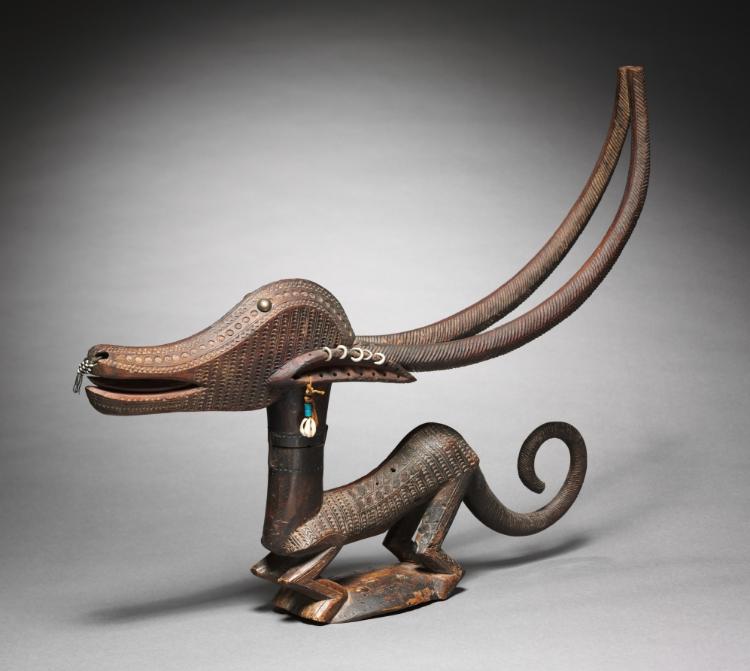
Bamana dancers in Mali performed with carved chi wara headdresses, a mythical farming beast
Chi wara is a mythical farming beast that, in Bamana belief, taught people in Mali how to farm. Its carved headdresses combine human, antelope and anteater features, marking it as an agricultural spirit rather than an earthly animal. Male dancers performed with paired male and female headdresses, mounted on basketry caps, at agricultural competitions and weddings, accompanied by women's songs. Styles vary by region, and the naturalistic carving of this female example suggests it was made in the Djitoumou region of southern Mali. Its blacksmith-carver decorated the body with patterns that emphasise its muscles.
Chi wara shows how a myth about the origins of farming could be carried through dance and carving, linking agricultural success with a mythical teacher. The regional styles show that one tradition can look very different across a single area.
Cleveland Museum of Art · CC0
Image: Cleveland Museum of Art, 1965.325 · CC0

