mind & bodyScienceDaily
Scientists identify two overlooked skills that predict reading success
explained
Reading is the process of taking in the sense or meaning of the symbols of written language, by means of sight (or, in some cases, touch).
The ability to read (and write) is called literacy.
For educators and researchers, reading is a multifaceted process involving such areas as word recognition, orthography (spelling), punctuation, alphabetics, phonics, phonemic awareness, vocabulary, comprehension, fluency, and motivation.
Other types of reading and writing, such as pictograms (e.g., a hazard symbol or an emoji), are not based on speech-based writing systems. The common link is the interpretation of symbols to extract the meaning from the visual notations or tactile signals (e.g., braille).
There is a growing body of evidence which illustrates the importance of reading for pleasure for both educational purposes as well as personal development.
From Wikipedia: Reading (CC BY-SA 4.0) ↗This challenges the assumption that reading difficulty is mainly a problem of seeing letters or of general intelligence, and points to practical skills that can be taught.
Written language is only about 5,000 years old, so human brains have no dedicated reading area; it repurposes other circuits.
longer watch · 27:17
 27:17
The AI Language We Can't Read: Neuralese ft. Rob Miles - Computerphile
Computerphile on YouTube ↗


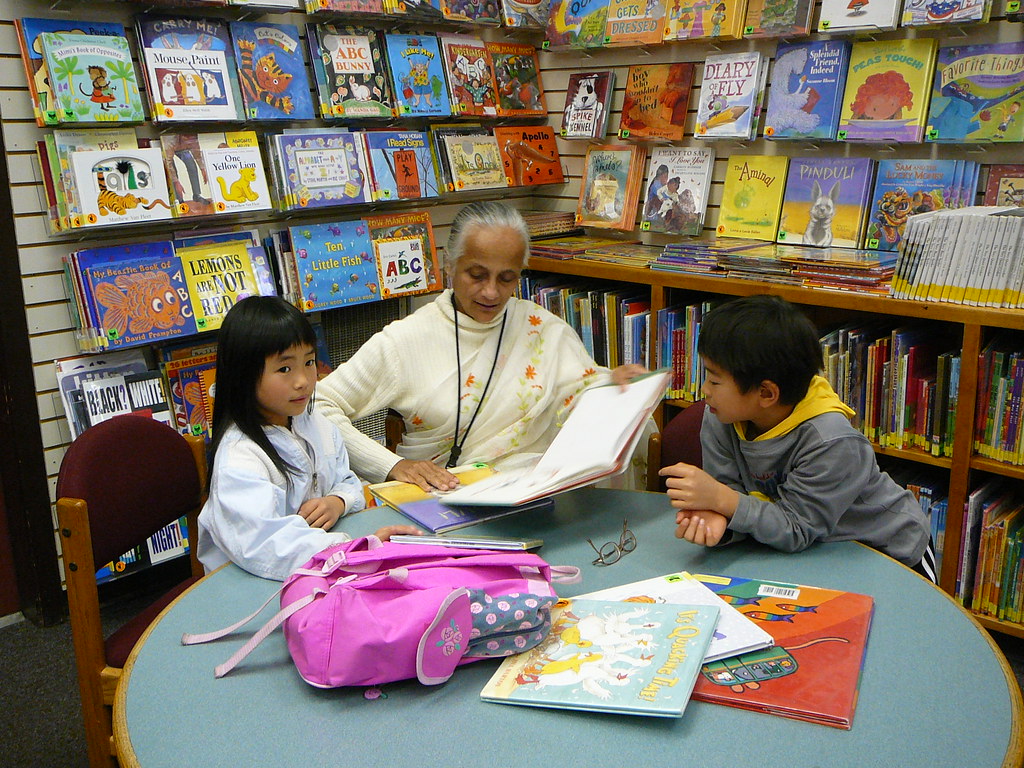
Illustrative photo · San José Public Library, CC BY-SA 2.0, via Flickr

