science & techESA/Hubble
A Hubble image shows a spiral galaxy 137 million light-years away that hosted a white dwarf supernova
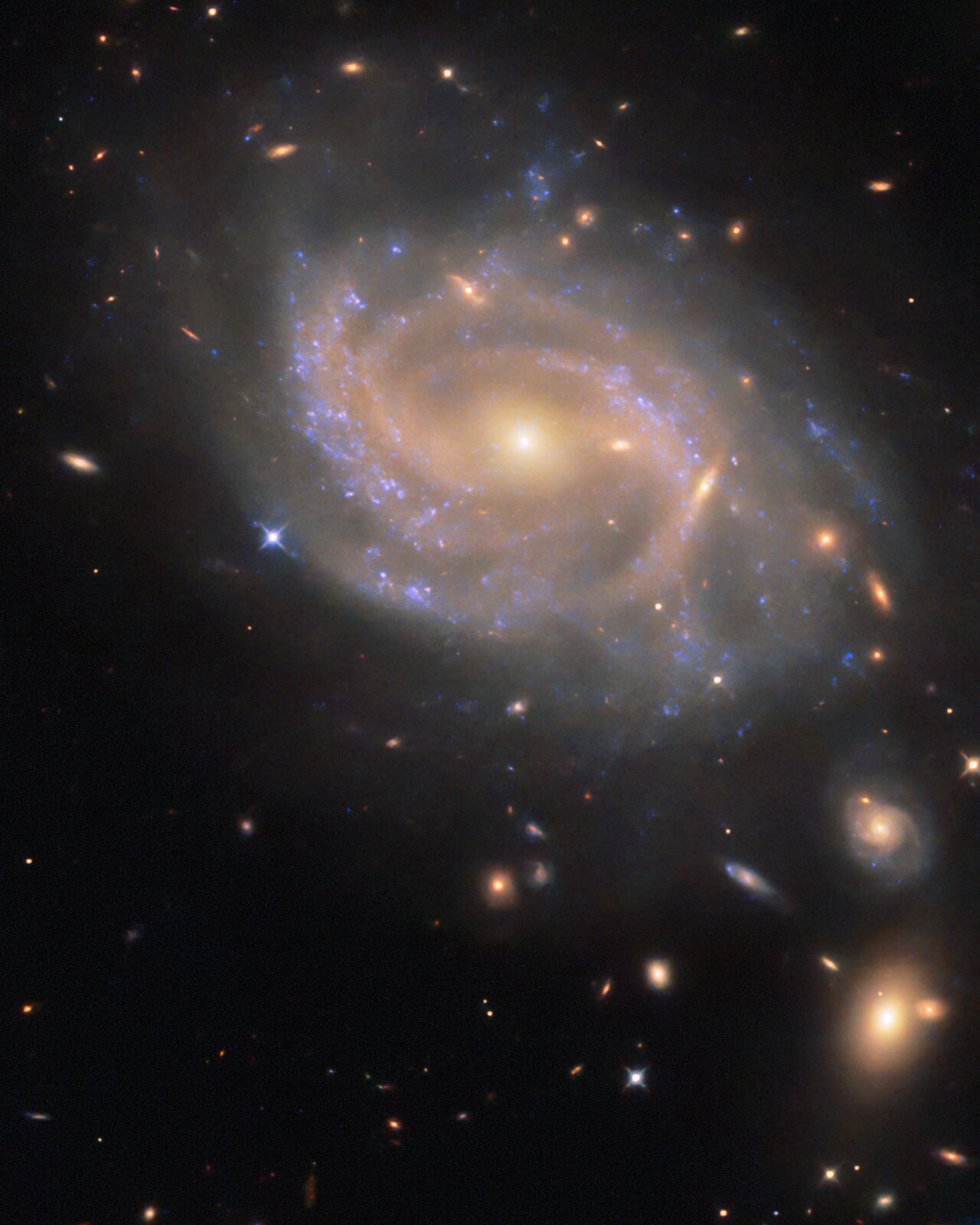
Hubble's Picture of the Week shows NGC 3285B, a spiral galaxy about 137 million light-years away in the constellation Hydra. The galaxy sits on the outskirts of the Hydra I cluster, which is anchored by two giant elliptical galaxies. It was observed because it hosted a Type Ia supernova, named SN 2023xqm, in 2023. Type Ia supernovae occur when a white dwarf detonates and briefly shines about five billion times brighter than the Sun. Hubble is part of a programme studying 100 such explosions in ultraviolet, optical and near-infrared light. The goal is to separate the effects of distance and dust, which can make supernovae look redder than they are. This work will refine cosmic distance measurements.
Type Ia supernovae are used as standard candles to measure cosmic distances, so correcting for dust and distance improves our estimates of how the universe expands. The image shows that a careful observing programme can directly sharpen that cosmic yardstick.
Hydra is the largest of the 88 modern constellations by area and stretches about 100 degrees across the sky.

