mythologyWikipedia
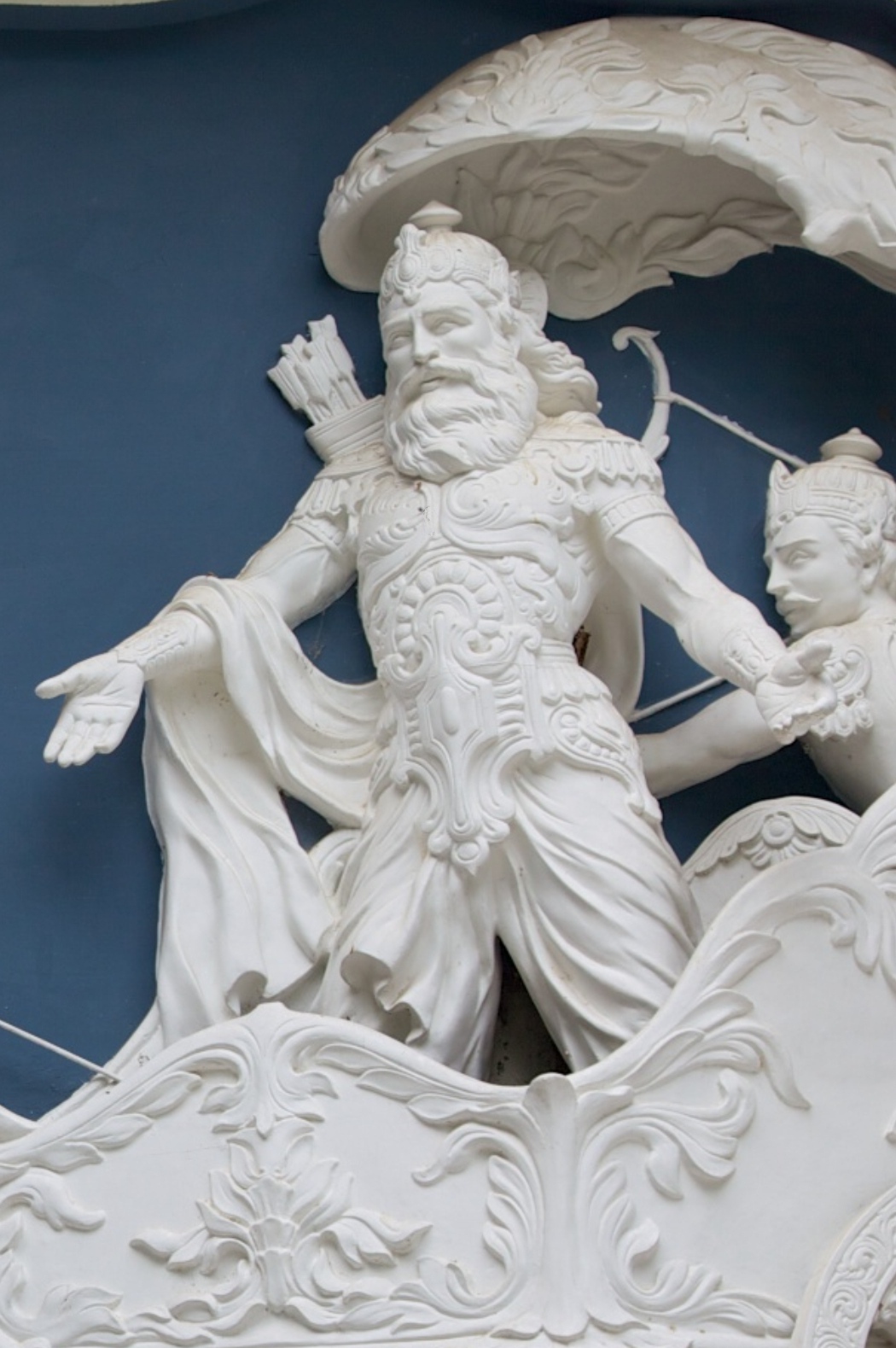
Bhishma, the Mahabharata elder whose vow gave him his name and the choice of his death
Bhishma, also called Devavrata, Gangaputra and Pitamaha, is a central figure of the Hindu epic Mahabharata, a statesman and commander of the Kuru kingdom. He is the son of King Shantanu and the river goddess Ganga. Shantanu promised never to question Ganga, but when she was about to give their eighth child to the river he stopped her; she explained that their sons were Vasus cursed by the sage Vashishtha to be born as mortals, left, and later returned the boy to his father, raised and taught by great sages. When Shantanu wished to marry Satyavati, her father asked that her son be heir. Devavrata gave up the throne and vowed lifelong celibacy, and so was called Bhishma, "the one who undertakes a severe vow". His father blessed him with Iccha Mrityu, the power to choose the time of his death. He served the Kuru throne for generations, and his loyalty led him to command the Kaurava army for ten days at Kurukshetra. On the tenth day Arjuna, aided by Shikhandi, laid him on a bed of arrows, where he lay for fifty-one days, teaching the Vishnu Sahasranama to Yudhishthira before dying at Uttarayana.
Bhishma is revered in Hindu tradition and extolled for his sacrifice and sense of duty; a "Bhishma pratigya" is a fierce vow. His death anniversary is observed as Bhishma Ashtami in the month of Magha. From his bed of arrows he counselled both Pandavas and Kauravas, sharing his knowledge of governance, dharma and the duties of a king.
Achilles (ancient Greece): his mother Thetis, daughter of the sea god Nereus, tried to make him immortal by dipping him in the river Styx, leaving only his heel vulnerable. Hippolytus (ancient Greece): a hunter devoted to Artemis, the virgin huntress, who turns away from marriage and love and refuses to honour Aphrodite.


From Wikipedia, the free encyclopedia · text CC BY-SA 4.0
Image: Richard Friederisk, CC BY-SA 2.0, via Wikimedia Commons


