science & techESA/Hubble1054 · Taurus constellation
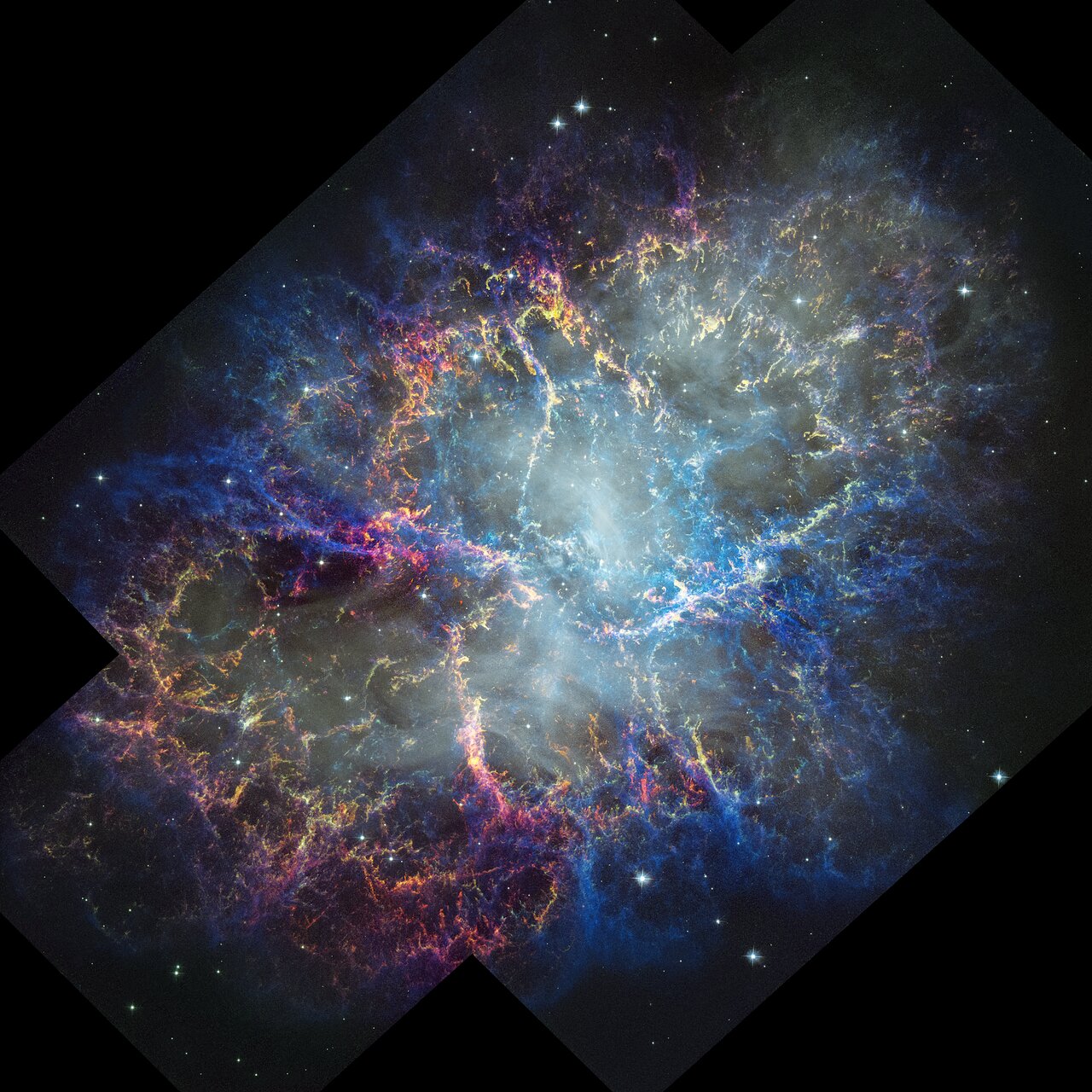
Hubble's new images show the Crab Nebula still expanding 25 years on
Nearly a thousand years ago, astronomers recorded a supernova so bright it could be seen in daylight for weeks. Its expanding remnant, the Crab Nebula, lies about 6,500 light-years away and is still growing outward. Edwin Hubble linked the nebula to those historical records, and the NASA/ESA Hubble Space Telescope has since studied it in fine detail. The latest revisit tracks roughly 25 years of expansion, letting astronomers measure how quickly the gas is moving through space.
Watching the nebula change over decades gives astronomers a direct measurement of how a supernova remnant evolves. It also links modern observations to a record of the sky kept by people almost a millennium ago.
The Crab Nebula's supernova was recorded by Chinese and other East Asian astronomers in 1054.
background
The Crab Nebula (catalogue designations M1, NGC 1952, Taurus A) is a supernova remnant and pulsar wind nebula in the constellation of Taurus. The common name comes from a drawing that somewhat resembled a crab with arms produced by William Parsons, 3rd Earl of Rosse, in 1842 or 1843 using a 36-inch (91 cm) telescope. The nebula was discovered by English astronomer John Bevis in 1731. It corresponds with a bright supernova observed in AD 1054 by Native American, Japanese, and Arab stargazers; this supernova was also recorded by Chinese astronomers as a guest star. The nebula was the first astronomical object identified that corresponds with a historically-observed supernova explosion.
From Wikipedia: Crab Nebula (CC BY-SA 4.0) ↗


