science & techMIT News
Watch the universe emerge from the dark ages, with Lumina
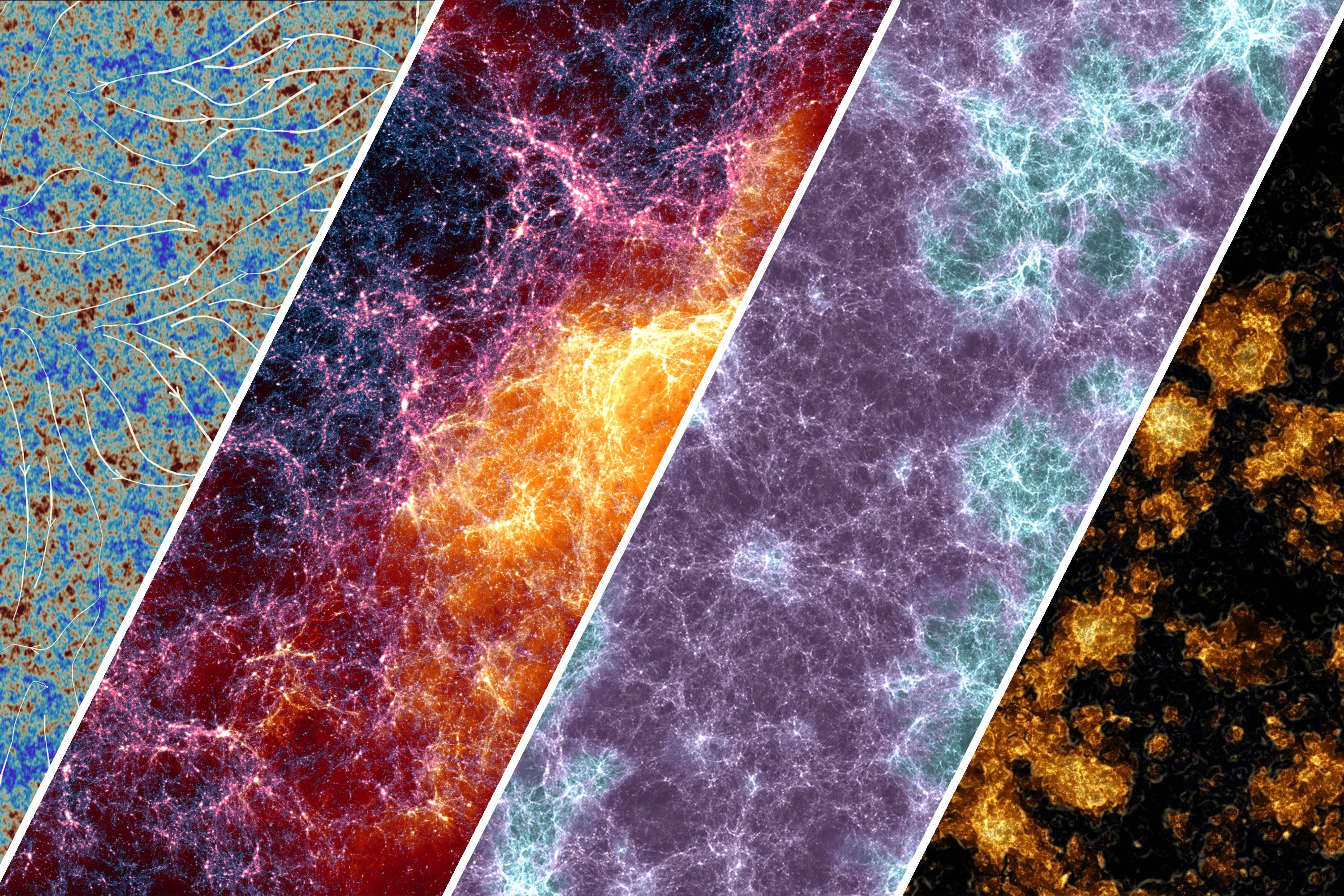
Researchers at MIT, Harvard and partner institutions have built Lumina, a very large computer simulation of the early universe. It starts about 45 million years after the Big Bang, during the cosmic dark ages when neutral hydrogen filled space and blocked light, and runs for roughly 2 billion years. The model covers a patch about 500 megaparsecs, or roughly 1.6 billion light-years, across and contains around half a trillion simulated particles and gas cells. It was run on the Frontier supercomputer at Oak Ridge National Laboratory. Lumina captures two key events, hydrogen and helium re-ionization, which occurred when early stars and galaxies, and then supermassive black holes, emitted enough ultraviolet light to strip electrons from atoms and let light travel freely. The team is sharing the simulation so astronomers can compare it with observations from current and future telescopes.
The simulation is the first to capture both hydrogen and helium re-ionization in one model, which helps explain how the universe went from opaque to transparent. It gives telescopes like JWST a detailed theoretical benchmark to test against.
The Frontier supercomputer at Oak Ridge National Laboratory in Tennessee is one of the most powerful machines in the world.


