science & techNASA
NASA’s Chandra Finds Source of Star’s Mysterious Outbursts
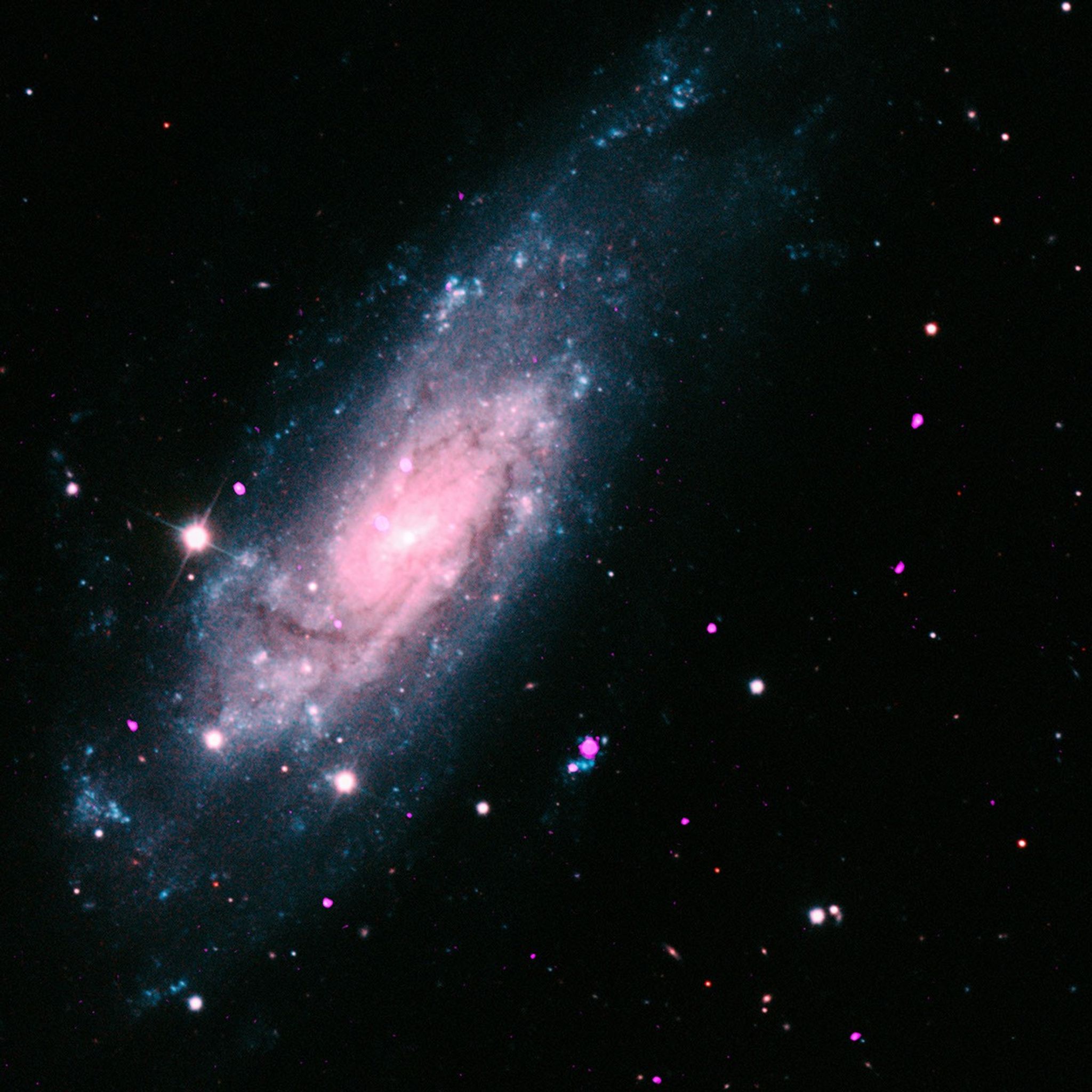
A giant, unstable star called AT 2016blu, in the galaxy NGC 4559 about 30 million light-years away, brightens sharply about every 113 days. Astronomers recorded at least 27 such bursts between 2012 and 2026. X-ray data from the Chandra observatory has now revealed why: a hidden companion, either a stellar-mass black hole or a neutron star, orbits the star every 113 days and pulls material off it. The star weighs at least 33 times the Sun and is a luminous blue variable, a hot massive star prone to eruptions. Its flares look like supernovae but leave the star intact, earning it the label supernova impostor. This is the first X-ray detection of such a star and the first with a compact companion.
On each 113-day orbit the companion swings close to the massive star and strips gas from its swollen outer layers. The sudden release of material brightens the system, then it fades until the next close approach. Chandra caught the system at the right time to see the X-rays from the companion.
It solves a 15-year puzzle and shows that some of these erratic stars are in fact binaries, where a close encounter on each orbit triggers the outburst. That helps explain how massive stars lose mass and may point to how black hole and neutron star pairs form.
Eta Carinae, the best-known luminous blue variable, produced a giant eruption in the 1840s that briefly made it the second-brightest star in the sky.


