science & techESA/Webb
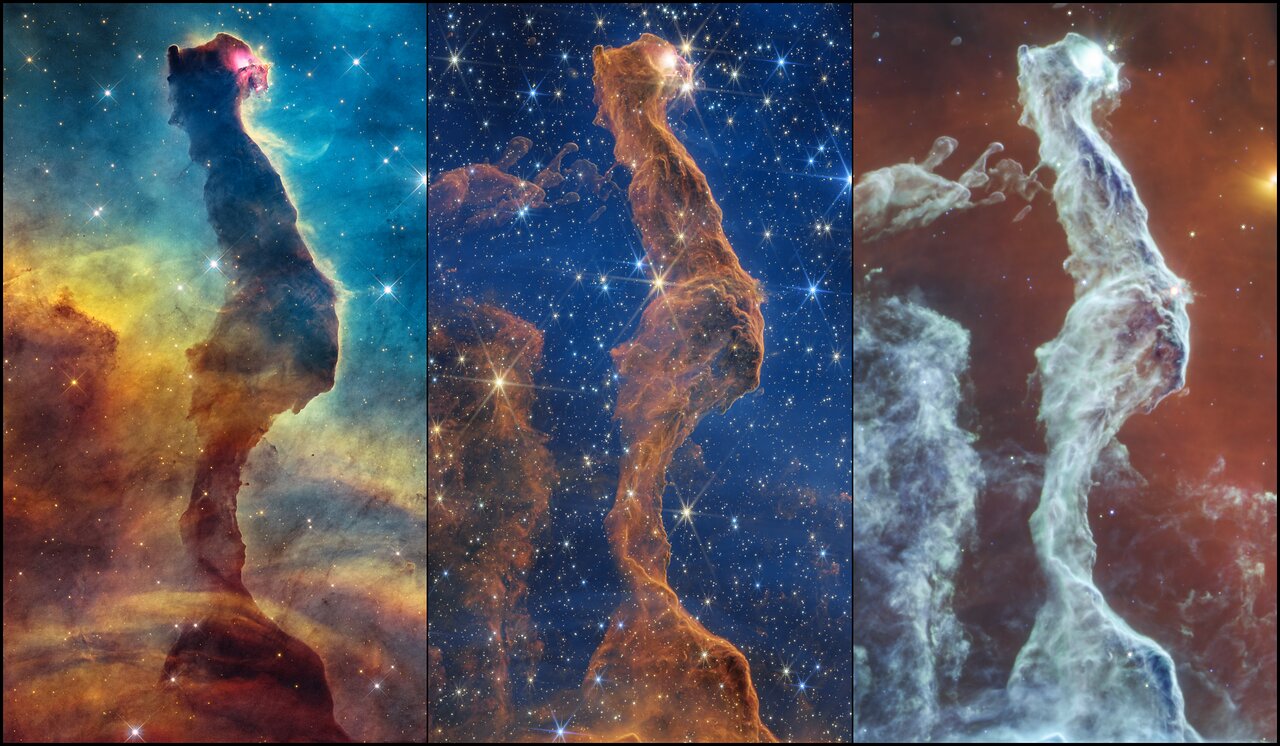
Cat’s Head Nebula (Hubble WFC3, Webb NIRCam, and Webb MIRI images)
Hubble and Webb have both observed the Cat's Head Nebula, a star-forming region in the Carina Nebula about 7,500 light-years from Earth. Hubble's visible-light view shows the cat as a dark, elongated pillar of dust with hints of young stars forming inside. Webb's infrared views, from its NIRCam and MIRI instruments, see through the dust to reveal the hidden stars and the warm material around them. Together the two telescopes give complementary views of the same process. The combined images show how star formation looks across visible and infrared light.
Using two telescopes at different wavelengths gives a far more complete picture of how stars form than either could alone. It shows how space telescopes work together to study the same objects.
The Carina Nebula is one of the largest and brightest nebulae in the sky.

