Africa is the youngest continent and the place where humans first evolved
the gist
Africa is the world's second-largest and second-most populous continent, covering about 30.3 million square kilometres, roughly 20 percent of Earth's land. Its population of nearly 1.4 billion is the youngest of any continent, with a median age of 19.7 in 2012 against a world median of 30.4. Africa, especially eastern Africa, is where the earliest hominids appeared around 7 million years ago, and Homo sapiens is believed to have originated there 350,000 to 260,000 years ago. The continent has 54 fully recognised states and is the most biodiverse region for large mammals, since it lost fewer megafauna in the Pleistocene extinction.
so what
Africa's youth and growing population will shape the global economy and climate debate in the coming decades, and its size and diversity make it poorly served by single-country generalisations.
fun fact
Africa is the only continent that is crossed by both the equator and the prime meridian.
more on this
watch · 2:14
2:14
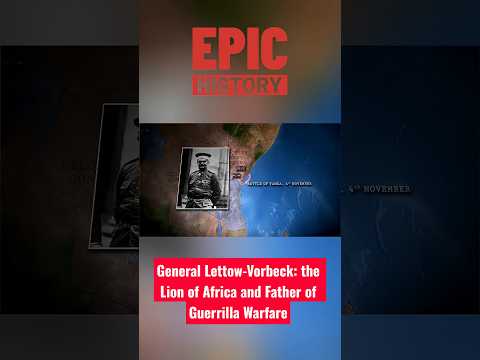
General Lettow-Vorbeck: the Lion of Africa and Father of Guerrilla Warfare
Trump and Netanyahu reportedly clash over whether to resume military action against Iran
the gist
Israeli reports also say the cabinet directed the military to prepare for a possible new attack on Iran.
so what
The United States and Israel have been closely aligned on Iran's nuclear programme and regional threats, so open disagreement between their leaders over military strategy is unusual and closely watched. Whether to resume strikes is a decision with consequences for shipping, oil markets and the wider Middle East.
fun fact
Benjamin Netanyahu has served as Prime Minister of Israel for more years in total than any other person.
world cultures & travel·Wikivoyage·classic9th–15th century · Siem Reap, Cambodia
Angkor was the largest pre-industrial city on Earth, covering about 3,000 square kilometres
the gist
Angkor, near Siem Reap in northern Cambodia, was the capital of the Khmer Empire, which ruled much of mainland Southeast Asia between roughly the 9th and 15th centuries. At its height the city spread across about 3,000 square kilometres, making it the largest pre-industrial city on Earth by area. Its growth depended on water: huge reservoirs called barays, along with canals and embankments, stored monsoon rain and carried it to rice fields. That system let farmers harvest more than once a year and fed a very large population through the dry season. The temple complex of Angkor Wat, built in the early 12th century, is the best-known monument and still stands at the heart of the park.
how it works
The Khmer kings built enormous rectangular reservoirs that caught monsoon rain during the wet season. Earthen dykes and canals moved that water into rice paddies, so farmers could grow crops across much of the year. The surplus food supported craftsmen, builders and the workforce that raised the temples.
so what
Angkor shows how a society without industrial machinery could build a city on a scale that rivals modern metropolises, using engineering and water management instead. Some historians link its decline to drought, flooding and shifts in its water systems, which makes it a long-running case study in how cities depend on managing water. The site is a UNESCO World Heritage Site and one of the most important archaeological landscapes in Southeast Asia.
fun fact
The outline of Angkor Wat appears on the national flag of Cambodia.
more on this
background
Angkor (Khmer: អង្គរ [ʔɑŋkɔː], lit. 'capital city'), also known as Yasodharapura (Khmer: យសោធរបុរៈ; Sanskrit: यशोधरपुर), was the capital city of the Khmer Empire, located in present-day Cambodia. The empire flourished from approximately the 9th to the 15th centuries. The site of Angkor has a variety of religious temples, libraries, moats, and other buildings. These other buildings could have been used by officials to the grand palace housing the Khmer king. Those constructed outside the main complex were not made of stone. One of the more visited places in Angkor is Angkor Wat, a temple complex that is one of Cambodia's tourist attractions.

 2:14


