world cultures & travelCleveland Museum of Art1900s · Nigeria
A Yorùbá coronet may only be worn by a king descended from Oduduwa
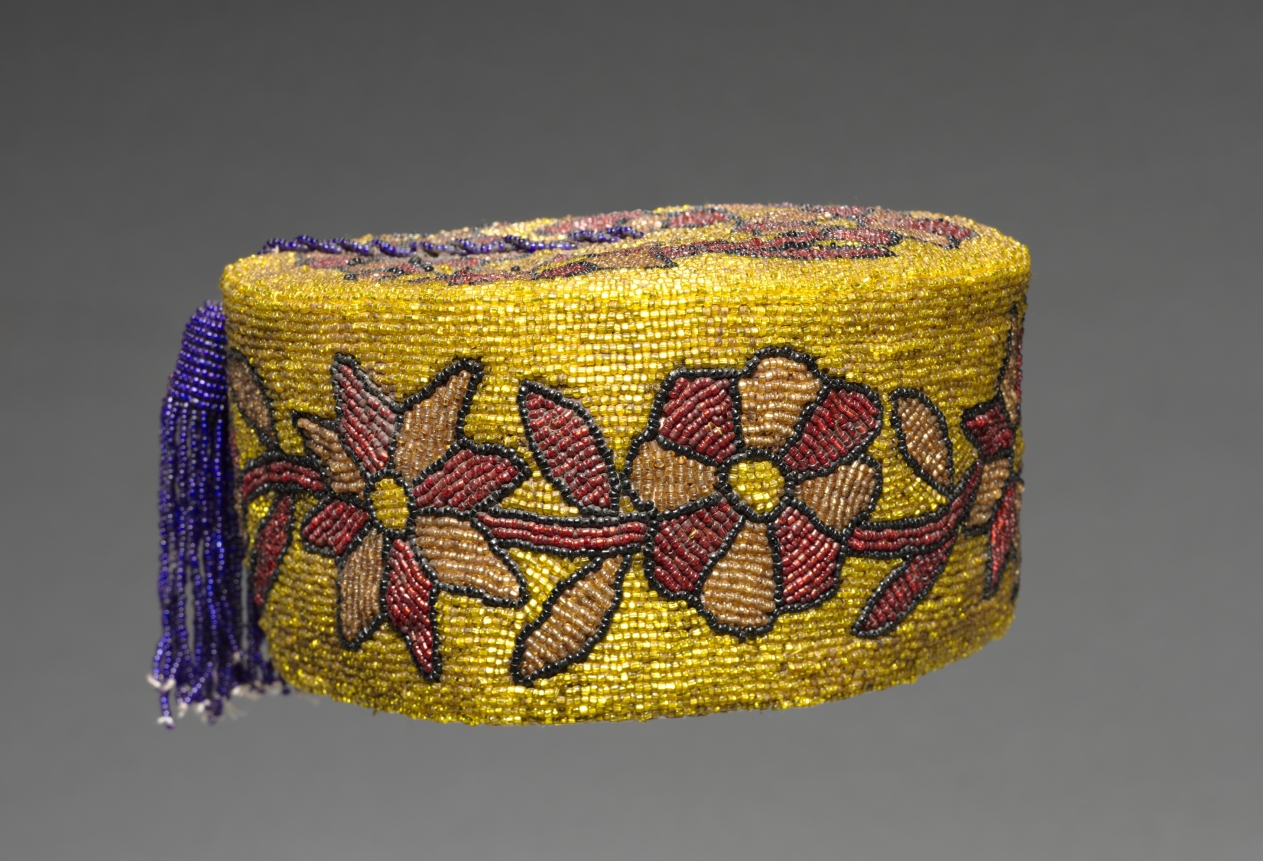
In Yorùbá tradition, a rare conical crown called ade may only be worn by a king descended from Oduduwa, the first king of the Yorùbá. A coronet called oríkògbófo is less formal: the king may wear it at everyday public events and when entertaining non-Yorùbá visitors. Its meaning is wealth rather than royal rank. This example is cloth decorated with glass beads, which were likely imported from Venice or Bohemia, now the Czech Republic. The beads make the regalia a record of trade linking West African courts to European glassmaking.
The coronet shows how Yorùbá royal dress absorbed imported European materials while keeping its own rules about who could wear what. It shows trade and tradition working together.
background
The Yoruba people ( YORR-uub-ə; Yoruba: Ìran Yorùbá, Ọmọ Odùduwà, Ọmọ Káàárọ̀-oòjíire) are a West African ethnic group who inhabit parts of Nigeria, Benin, and Togo, a region collectively called Yorubaland. The Yoruba constitute more than 50 million people in Africa and over a million outside the continent, and bear further representation among the African diaspora in countries like Brazil and Cuba, and in the Caribbean. The vast majority of Yoruba live in Nigeria where they make up 20.7% of the country's population according to Ethnologue estimates, making them one of the largest ethnic groups in Africa. Most Yoruba people speak the Yoruba language, which is the Niger–Congo language with the largest number of native or L1 speakers.
From Wikipedia: Yoruba people (CC BY-SA 4.0) ↗ · text CC BY-SA 4.0see


key facts
- Country
- Benin
- Located in
- Ogun State
- Population
- 47.0 million
Facts: Wikidata (CC0)
Cleveland Museum of Art · CC0
Image: Cleveland Museum of Art, 1998.279 · CC0


